
PC /1996

Resident Evil
Action-adventure
Explore game pageSAGAS IN THE CLABA ARCHIVE · 1996–2009
A mansion, four bullets, and a lot of dark corridors: this is how Capcom's series was born, the one that named survival horror and ended up sending Leon to a lost village in Europe.
5 games in the archive, for PC, Nintendo 64. Sorted by year, with cover art, community score and one you can play in the browser, nothing to install.
See the timelineTIMELINE
By the release year of the version on each page. Tap a cover to open its page; “Play online” marks the ones that run in the browser.
Action-adventure
Explore game page
Action-adventure
Explore game page
Action-adventure
Explore game page
Action-adventure
Explore game page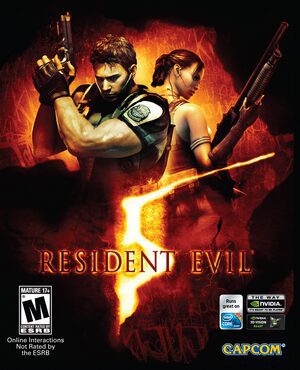
Action-adventure
Explore game pageTHE STORY OF THE SAGA
A mansion in the middle of the woods, a handful of bullets that are never enough, and the suspicion that behind the next door there is something that should no longer be walking. That is what Capcom built in 1996 into the first Resident Evil (Biohazard in Japan), directed by Shinji Mikami. The idea went further back: producer Tokuro Fujiwara wanted to revive the approach of Sweet Home, the horror role-playing game he himself had directed for the Famicom in 1989, and Capcom chose the label survival horror to sell it. That label ended up naming an entire genre.
The PC version came first to Japan, in December 1996, and to the rest of the world in 1997. Then came the move to the city: Resident Evil 2 (PlayStation in 1998, PC in 1999) took the nightmare out of the mansion and let it loose on the streets of Raccoon City with two protagonists, Leon and Claire. Resident Evil 3: Nemesis (1999 on console, 2000 on PC) put Jill Valentine back at the center, in the middle of her escape from the city, and set Nemesis on her trail, a stalker who appears just when you thought the room was safe.
The big turn came with Resident Evil 4, again with Mikami in charge. It came out on GameCube in 2005 and reached PC in 2007, in a Sourcenext port that took quite a beating. It swapped the zombies for the villagers of a lost village in Europe, sent Leon to rescue the daughter of the President of the United States, and glued the camera to his shoulder: fewer creaking doors, more action, and the same tension of being barely stocked with ammo. Resident Evil 5 continued down that path in 2009 (consoles in March, PC in September), took Chris Redfield to Africa and paired him with Sheva Alomar in the first main installment designed for two-player play.
What is interesting about the series is that it has reinvented itself without losing its core gesture: managing the little you have. Mikami himself has acknowledged that the inventory management in these games owes a lot to Sweet Home, and that obsession with counting every round and every herb is still there even as the camera moves around.
On Clásicos Básicos you will find five game pages for the series, all in their PC versions: Resident Evil, Resident Evil 2, Resident Evil 3: Nemesis, Resident Evil 4, and Resident Evil 5. Played in order, they tell very well how a fixed-camera mansion ended up as an action adventure across half the world.
